What Happens After Land Enters the Zoning (İmar) Stage?
In land investment, value is not determined by location alone.
The development stage of the land plays a critical role in shaping both its potential and its risk profile.
Among all stages, the zoning (İmar) stage represents a major turning point.
It transforms land from a speculative asset into a structured, usable investment.
But the key question remains:
What actually happens after land enters this stage?
1. What Does the Zoning (İmar) Stage Really Mean?
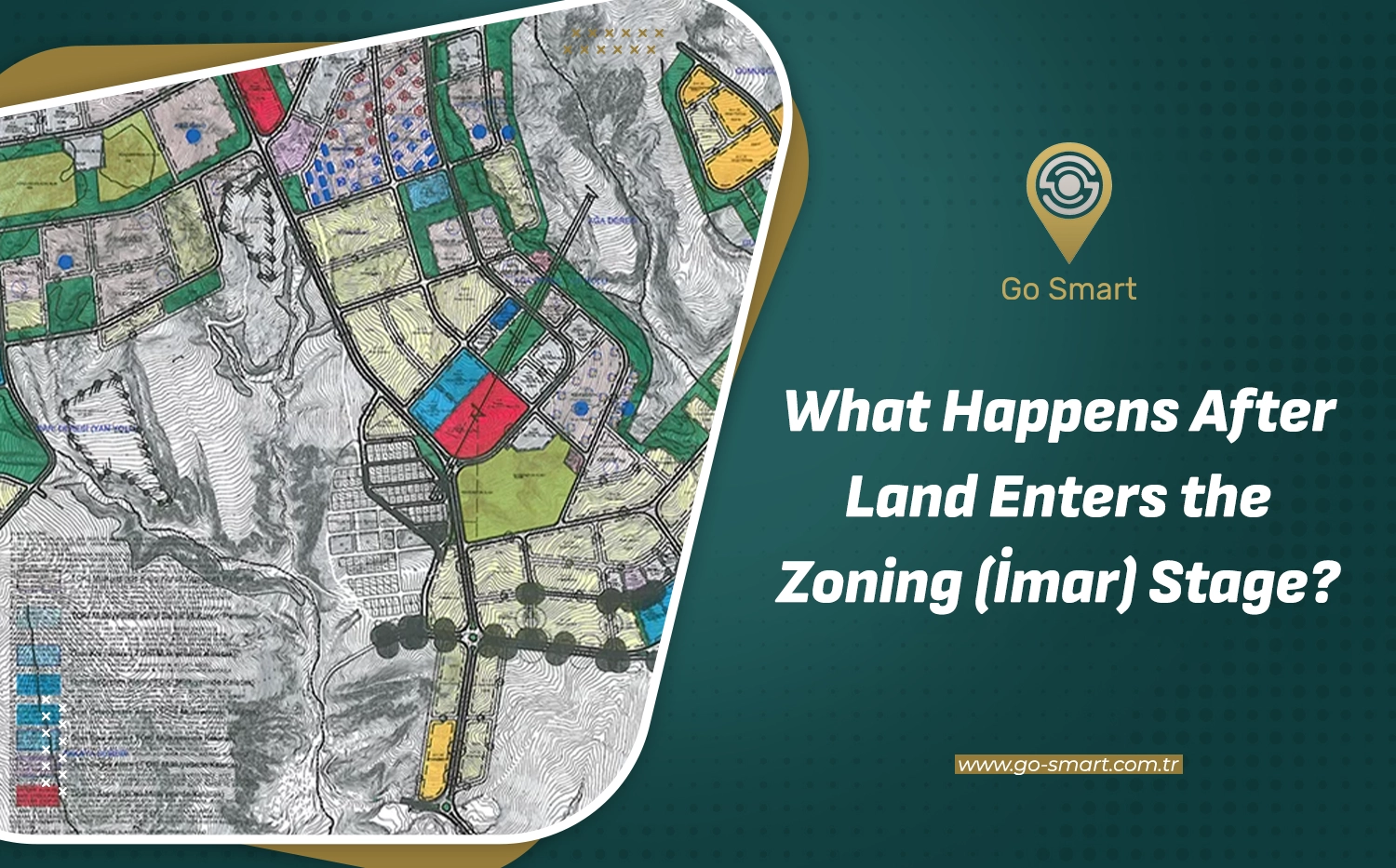
Zoning means that the land is now part of an officially approved urban plan.
This goes beyond simply allowing construction—it defines exactly how the land can be used.
This includes:
- Land use type (residential, commercial, mixed-use)
- Building ratios and density
- Height limits (number of floors)
- Road networks and infrastructure planning
📌 In simple terms:
The land moves from uncertainty to clarity.
2. How Does Land Value Change After Zoning?
Before zoning, land is priced based on expectations and future potential.
After zoning, its value becomes tied to actual usability and development capacity.
This shift typically leads to:
- Noticeable increase in market value
- Higher demand from developers and investors
- Transition into a development-ready asset
📌 Zoning is not just a legal step—it’s a revaluation point.
3. Who Buys Land After Zoning?
The buyer profile changes significantly after zoning approval.
Before zoning:
Mostly long-term investors anticipating growth.
After zoning:
The market attracts:
- Real estate developers
- Construction companies
- Investors seeking ready-to-develop land
This increases liquidity and drives stronger price competition.
4. Does Zoning Mean the Opportunity Is Gone?
This is a common misconception.
Zoning does not mean the opportunity is over.
It means that:
- Part of the growth has already materialized
- A new phase of investment has begun
📌 The difference lies in the type of return:
- Pre-zoning = higher growth potential with longer horizon
- Post-zoning = more stability with clearer outcomes
The real question is not if you should invest,
but which stage fits your strategy.
5. What Happens Next? Infrastructure Development
Once zoning is approved, infrastructure development begins.
This includes:
- Roads and transportation networks
- Water and electricity systems
- Public services and facilities
As infrastructure progresses, land becomes not just buildable—but practically usable.
📌 Each step in infrastructure adds incremental value.
6. Are There Still Risks After Zoning?
While zoning reduces uncertainty, risks do not disappear entirely.
Potential challenges include:
- Choosing a less desirable location within the plan
- Delays in infrastructure implementation
- Entering the market at an inflated price
📌 Even after zoning,
analysis remains essential.
7. How Does Go Smart Approach This Stage?
At Go Smart, zoning is not treated as an endpoint, but as part of a broader investment strategy.
The company focuses on:
- Selecting land within clearly defined zoning plans
- Analyzing locations across different development stages
- Building diversified land portfolios
- Offering directly owned land—not brokerage listings
📌 This means investors are not buying random plots,
but entering a structured investment framework.
8. How Should Investors Read This Stage?
A smart investor does not look at zoning in isolation.
It is part of a larger development cycle.
Key questions include:
- Am I seeking growth or stability?
- Is my entry point early or late in the cycle?
- Does the location have real demand drivers?
📌 Investment success depends on timing, location, and strategy—not just the stage itself.
Conclusion
The zoning (İmar) stage represents a fundamental shift in land investment.
It transforms land from a speculative asset into a functional, development-ready opportunity.
However, the true value lies not in the stage alone,
but in when and how you enter it.
📌 Smart investing is not about following stages—
it’s about understanding them.
FAQ
1. Does land value increase immediately after zoning?
In most cases, yes—due to increased clarity and demand.
2. Can construction start right after zoning?
It depends on infrastructure readiness, not zoning alone.
3. Is investment still profitable after zoning?
Yes, but returns tend to be more stable rather than exponential.
4. What is the main difference between pre- and post-zoning?
Pre-zoning relies on expectations, while post-zoning is based on actual usability.
5. How do you choose the right land after zoning?
By analyzing its exact location within the zoning plan—not just the general area.