


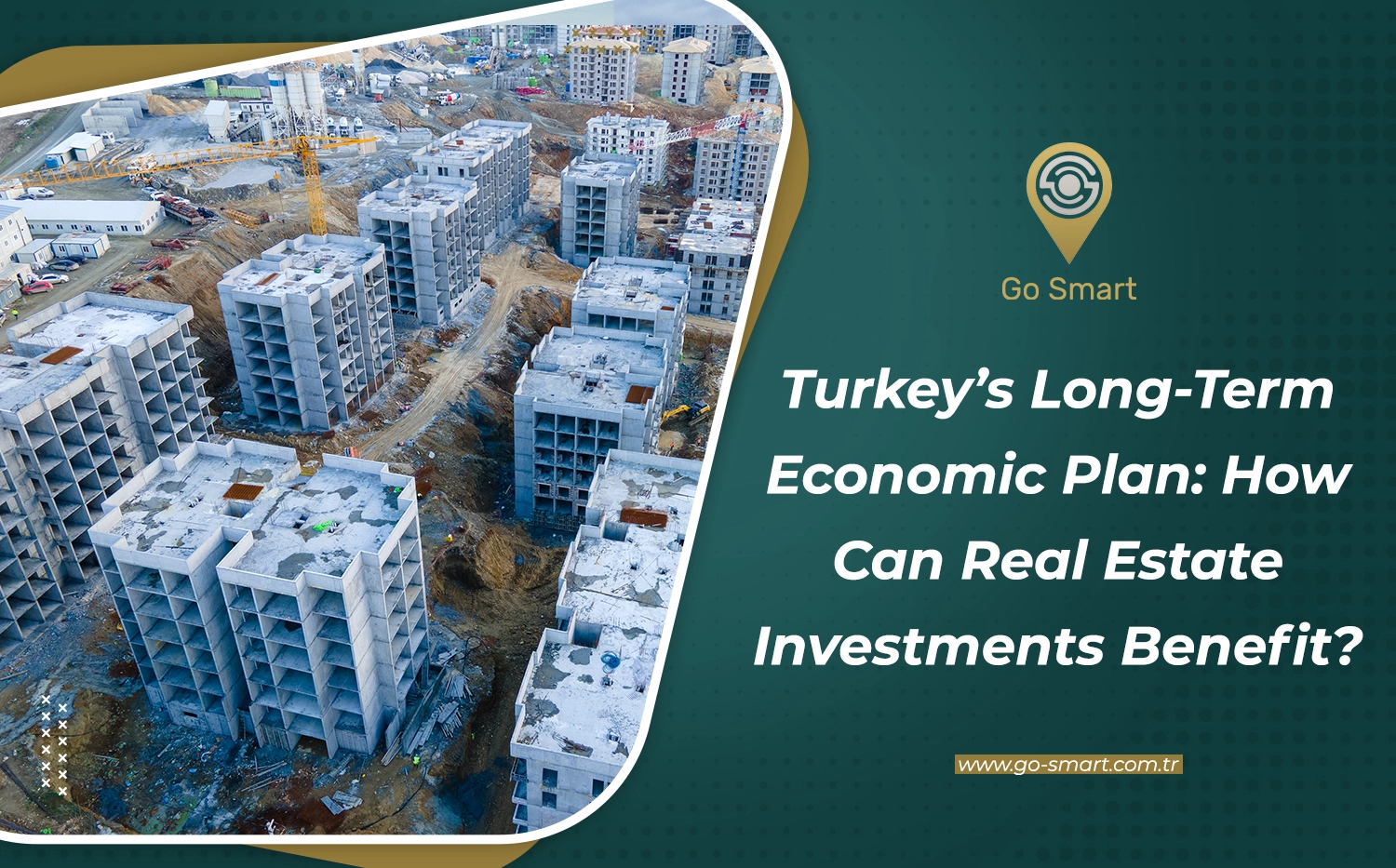
Turkey’s Long-Term Economic Plan: How Can Real Estate Investments Benefit?
Turkey is undergoing a profound economic transformation that goes far beyond short-term fiscal policies. The country is pursuing a long-term strategic vision aimed at strengthening its position as a regional hub for trade, investment, and global supply chains.
This transformation is closely tied to Turkey’s unique geographic location at the crossroads of Europe, Asia, and the Middle East. Over the past years, policymakers have increasingly focused on leveraging this strategic advantage through infrastructure development, transportation networks, logistics corridors, and urban expansion projects that support sustainable economic growth.
According to official reports published by the Presidency of Strategy and Budget, Turkey’s long-term development framework prioritizes productive investments, transportation infrastructure, urban development, and attracting international capital as key drivers of future growth.
(Source: https://www.sbb.gov.tr)
From a Traditional Economy to a Strategic Connectivity Hub
Turkey is no longer positioning itself solely as a domestic market. Instead, it is emerging as a strategic bridge connecting global supply chains between East and West.
This shift is reflected in major investments in transportation infrastructure, including highways, railways, ports, airports, and logistics centers. Such projects have gained even greater importance amid the disruptions that have affected global supply chains in recent years.
Events such as the COVID-19 pandemic, the Russia–Ukraine conflict, and geopolitical tensions in critical maritime routes like the Strait of Hormuz and the Red Sea have highlighted the vulnerability of global trade networks.
As a result, governments and investors are increasingly seeking alternative routes and logistics hubs capable of supporting long-term trade resilience. Turkey’s location and infrastructure investments position it as one of the most important beneficiaries of this global shift.
Real Estate as Part of the Economic Vision
In Turkey’s current economic model, real estate is not viewed merely as an investment asset. Instead, it is considered an essential component of broader economic development.
Every new transportation project, industrial zone, logistics corridor, or urban expansion initiative creates additional demand for land and property while increasing long-term value.
This relationship between infrastructure, economic growth, and real estate explains why property investments in Turkey often follow strategic government development plans rather than relying solely on traditional market dynamics.
The Turkish Ministry of Trade has repeatedly emphasized the importance of attracting foreign direct investment and improving the country’s business environment as central pillars of Turkey’s economic strategy.
(Source: https://www.trade.gov.tr)
Yenişehir: A Model of Future Urban Expansion
Within this broader framework, Yenişehir stands out as one of the most significant urban development areas in Istanbul.
Rather than representing ordinary urban growth, Yenişehir forms part of a comprehensive planning vision associated with major infrastructure and development projects designed to reshape Istanbul’s future.
The investment potential of the area is not based solely on its current condition but on several long-term factors, including:
- Urban planning and zoning progress (İmar)
- Infrastructure development
- Government-backed projects
- Future residential and commercial expansion
As these elements continue to advance, they contribute to the gradual appreciation of land values throughout the region.
How Investment Criteria Are Changing
As Turkey continues implementing its long-term development agenda, investors are increasingly shifting their focus from current prices to future value creation.
The key question is no longer:
“How much does this property cost today?”
Instead, forward-thinking investors ask:
“What will this area look like in five or ten years?”
This approach is particularly relevant in rapidly developing markets where infrastructure projects and government planning significantly influence future property values.
Economic Stability and the Role of Monetary Policy
Turkey’s economic strategy also relies on maintaining financial stability through monetary and fiscal policy.
The Central Bank of the Republic of Türkiye continues to implement measures aimed at supporting economic balance, improving market confidence, and managing inflationary pressures.
These efforts contribute to creating a more predictable investment environment over the medium and long term.
(Source: https://www.tcmb.gov.tr)
Meanwhile, demographic and urbanization trends published by the Turkish Statistical Institute (TÜİK) continue to demonstrate sustained demand for housing, infrastructure, and urban development across the country.
(Source: https://www.tuik.gov.tr)
A Long-Term Investment Perspective
When examining Turkey’s economic trajectory, one trend becomes increasingly clear: the country is building an integrated model that connects industry, trade, logistics, infrastructure, and urban development.
Within this model, real estate serves as a strategic asset that benefits directly from broader economic growth.
As transportation networks expand and new development corridors emerge, areas linked to infrastructure investment are likely to experience stronger long-term appreciation than markets driven solely by short-term demand.
For investors, this means that identifying future growth corridors may become more important than focusing exclusively on current market conditions.
Conclusion
Turkey’s long-term economic plan is not simply about improving economic indicators. It represents a broader effort to strengthen the country’s role as a global logistics, trade, and investment hub.
Within this vision, real estate plays a central role, benefiting from infrastructure development, urban planning, and economic expansion.
For investors, understanding these long-term trends can provide a significant advantage when evaluating future opportunities.
📌 Successful investors do not simply follow the market—they position themselves ahead of its next move
