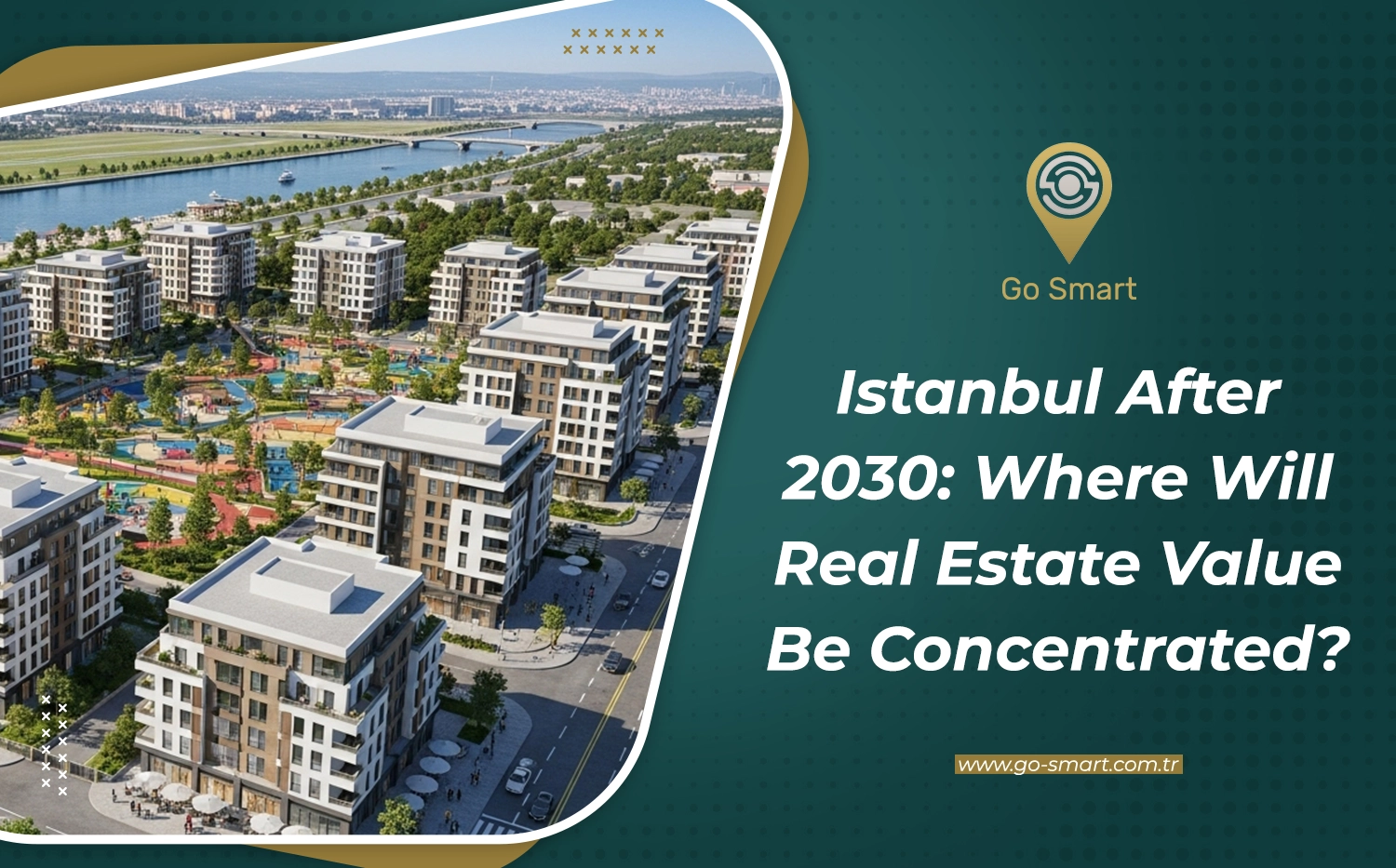
Istanbul After 2030: Where Will the New Real Estate Value Be Concentrated?
Istanbul is entering a new phase of urban and economic transformation. The conversation is no longer only about today’s property prices, but about which areas will shape the city’s next investment cycle after 2030.
As infrastructure projects expand and the city continues to grow outward, real estate value is gradually shifting from traditional districts toward new development corridors connected to transportation, logistics, and large-scale government planning.
For investors, the key question today is no longer “Where is demand now?”
It is: “Where will long-term value be created over the next decade?”
First: Istanbul Is Becoming a Multi-Centered City
For years, real estate activity in Istanbul was heavily concentrated in well-known central districts.
Today, the city is evolving into a multi-centered metropolitan structure, where several new urban hubs are being developed simultaneously for housing, business, logistics, and infrastructure.
This transformation changes how value is distributed across the city. Real estate growth is no longer tied only to traditional downtown areas, but increasingly linked to future infrastructure and expansion zones.
Second: Major Projects Are Reshaping Real Estate Value
Large-scale government projects have become one of the strongest drivers of the Turkish real estate market.
These include:
- New metro and transportation networks
- Urban transformation projects
- Logistics and industrial corridors
- Expansion areas surrounding major infrastructure developments
- New city planning projects connected to Kanal Istanbul
Such projects do more than increase prices. They gradually shift the center of investment gravity from one district to another.
Third: Northern and Western Istanbul Are Emerging Growth Corridors
Istanbul’s future expansion is moving clearly toward the northern and western sides of the city, where large-scale urban development is still possible.
Areas such as:
- Arnavutköy
- Emerging districts around Başakşehir
- The surroundings of Kanal Istanbul
- Yenişehir development zones
are increasingly attracting investor attention due to their direct connection to government-backed infrastructure projects.
These locations represent long-term urban growth rather than short-term speculative movement.
Fourth: Yenişehir Represents the Future Development Model
Among Istanbul’s expansion zones, Yenişehir stands out as one of the clearest examples of future-oriented investment.
The area is directly linked to the Kanal Istanbul vision and is expected to become part of a broader urban transformation strategy on the European side of the city.
What makes Yenişehir important is that its value is connected to:
- Ongoing zoning processes (İmar)
- Infrastructure development
- Government-backed planning
- Future residential and commercial expansion
This means the region’s growth potential is based on structural urban development rather than temporary market momentum.
Fifth: Why Will Investment Priorities Change After 2030?
Several factors are expected to reshape Istanbul’s real estate map over the next decade:
- Saturation and price increases in traditional central areas
- Expansion of government projects toward outer districts
- Growing demand for newly planned communities
- Transportation infrastructure reducing travel distances between districts
As accessibility improves, entirely new investment centers are likely to emerge.
Sixth: How Smart Investors Think Today
Real estate investors today are becoming more strategic.
Instead of focusing only on current demand, experienced investors analyze:
- Future infrastructure
- Urban planning direction
- Government expansion policies
- Long-term population movement
In other words, the question is no longer:
“Where should I buy today?”
But rather:
“Where will the city grow tomorrow?”
Seventh: How Go Smart Reads the Future of Istanbul
At Go Smart, investment opportunities are evaluated based on long-term urban transformation and infrastructure trends.
The focus is not simply on selling property, but on identifying areas expected to gain strategic value as Istanbul evolves after 2030.
This includes:
- Land portfolios in emerging development zones
- Areas connected to future transportation projects
- Locations positioned within official zoning plans
- Investment opportunities linked to real urban expansion
The goal is to connect real estate investment with the future direction of the city itself.
Conclusion
Istanbul after 2030 will not look like the Istanbul investors know today.
The city is gradually transforming into a multi-centered economic and urban hub, where new infrastructure projects and development zones redefine where real estate value is concentrated.
For investors, the opportunity is not only in understanding the current market — but in understanding where the next cycle of growth will begin.
📌 The investors who read the direction of the city today are the ones most likely to benefit from its future growth.
Frequently Asked Questions (FAQ)
1. Which areas are expected to grow the most in Istanbul after 2030?
Northern and western districts connected to infrastructure projects and urban expansion are expected to attract significant growth.
2. Why is Yenişehir considered an important investment zone?
Because it is directly connected to the Kanal Istanbul project and future urban planning developments.
3. Will central Istanbul districts continue to grow?
They are likely to remain important, but growth rates may become slower compared to emerging development zones.
4. What drives long-term real estate value in Istanbul?
Infrastructure, zoning development, transportation projects, and government-backed urban planning.
5. Is land investment becoming more attractive than apartments?
Many investors are shifting toward land in emerging areas due to its higher long-term growth potential.